
Technical Data Sheet
Standard and Dry-Peel VOID Materials
Behaviour, substrate suitability and selection guidance for the two VOID constructions.
Available on request
Serving India and global markets
Tamper-Evident Release Films
Permanent-transfer tamper evidence that leaves a visible VOID residue on the substrate when removal is attempted.
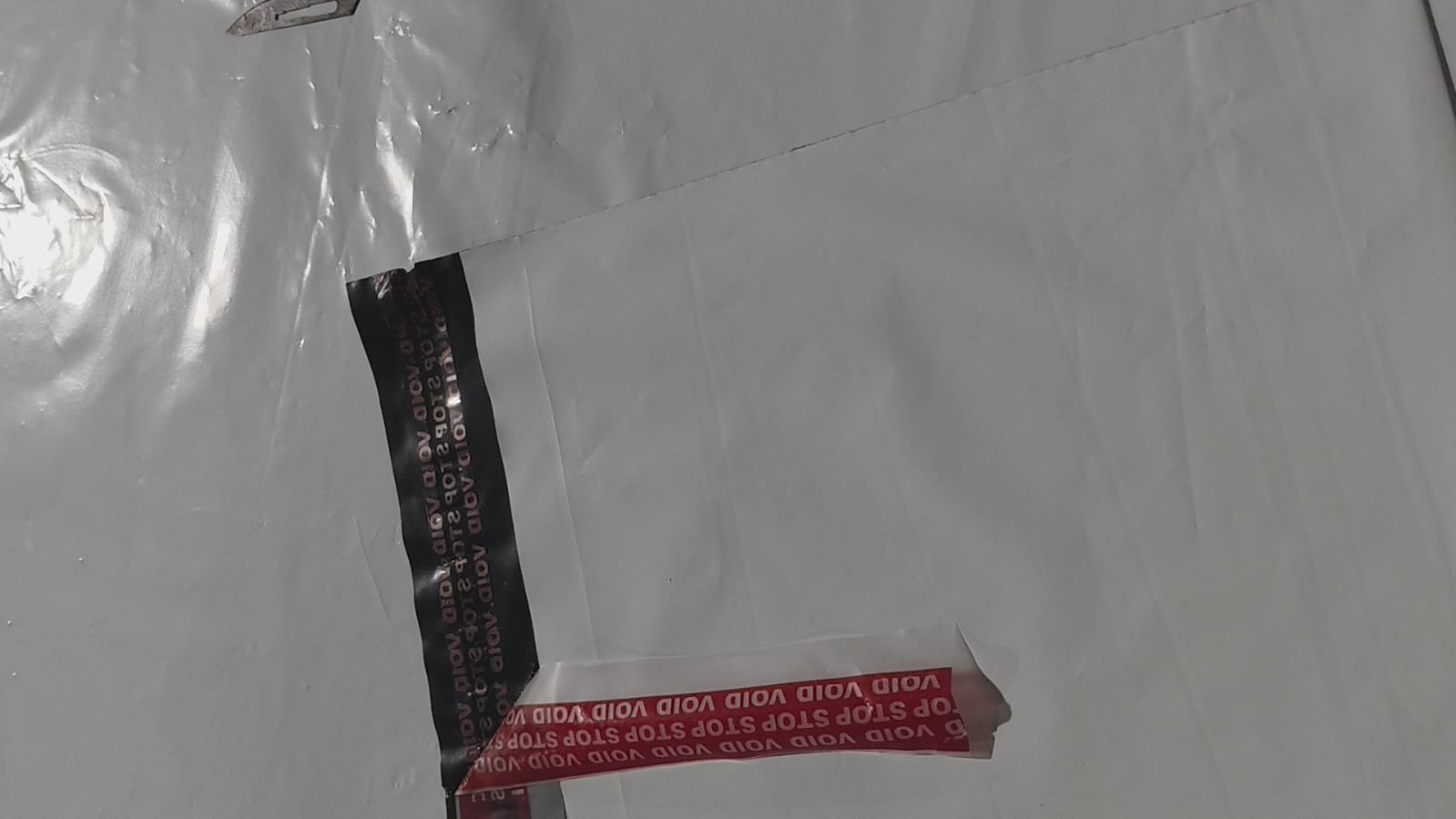
Standard VOID material is a transfer construction: when the label or film is lifted from the surface it was applied to, part of it stays behind. What remains is a tacky VOID residue that marks the substrate permanently.
It is suited to coated paperboard, glass, plastic and metal — surfaces smooth enough for the residue to transfer cleanly and stay legible. Applications include pharmaceutical packaging, aviation and consumer-goods packaging where a seal needs to prove whether it has been opened.
Where the substrate is corrugated or uncoated paper, the dry-peel construction is usually the correct choice instead, because residue transfer behaves differently on porous surfaces.
A tacky VOID residue remains on the substrate after removal and cannot simply be wiped back to an unopened state.
Suitable for coated paperboard, glass, plastic and metal.
Used in pharmaceutical packaging, aviation and consumer-goods applications where evidence of opening matters.
Supplied as film and label material that runs through conventional label converting.
01
The label or film is applied to coated board, glass, plastic or metal.
02
Someone attempts to lift the seal.
03
The construction separates and part of it stays bonded to the substrate.
04
A tacky VOID residue is left on the substrate, marking it permanently.
Production and application photography of this construction. Nothing here is a mock-up.
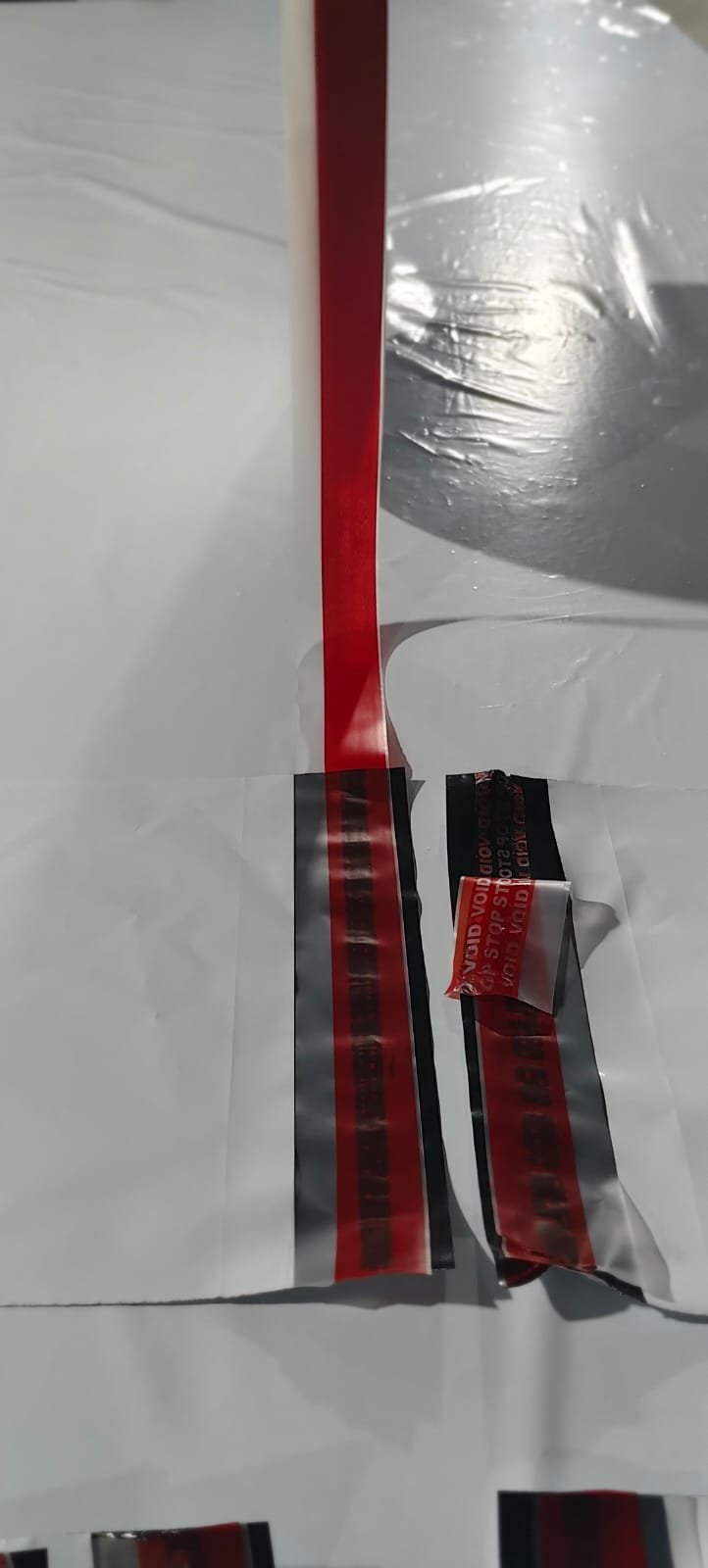
Final suitability should be confirmed through technical discussion and application testing.
| Property | Value | Status |
|---|---|---|
| Tamper response | Permanent VOID residue transfer | Standard |
| Residue character | Tacky residue on applied substrate | Standard |
| Reapplication | Not possible without visible evidence | Standard |
| Property | Value | Status |
|---|---|---|
| Coated paperboard | Suitable | Standard |
| Glass | Suitable | Standard |
| Plastic | Suitable | Standard |
| Metal | Suitable | Standard |
| Corrugated / uncoated paper | Use dry-peel VOID insteadResidue transfer behaves differently on porous surfaces. | Standard |
| Property | Value | Status |
|---|---|---|
| Width and length | Confirmed against your converting equipment | On enquiry |
| Custom VOID message | Available | Custom |
| Printing | Up to eight-colour gravure | Standard |
Technical Data Sheet
Behaviour, substrate suitability and selection guidance for the two VOID constructions.
Available on request
Application Guide
How visible tamper evidence works and which construction suits which application.
Available on request
Anything not covered here, ask the team directly — application questions are usually faster to answer than to document.
Ask a technical questionTamper-Evident Release Films
Non-stick VOID evidence for corrugated and uncoated paper, where residue transfer is unsuitable.
View solutionTamper-Evident Release Films
Everything Level 3 does, plus a heat indicator that turns from white to pink when the seal is warmed.
View solutionTamper-Evident Release Films
Integrate visible tamper evidence into your bag construction without compromising production efficiency.
View solutionSend your substrate, dimensions, operating conditions and estimated volume. The enquiry form arrives pre-filled with this product so you only need to describe the application.